Floss, Brush, Water Pick: A Dentist's Take on the Right Order
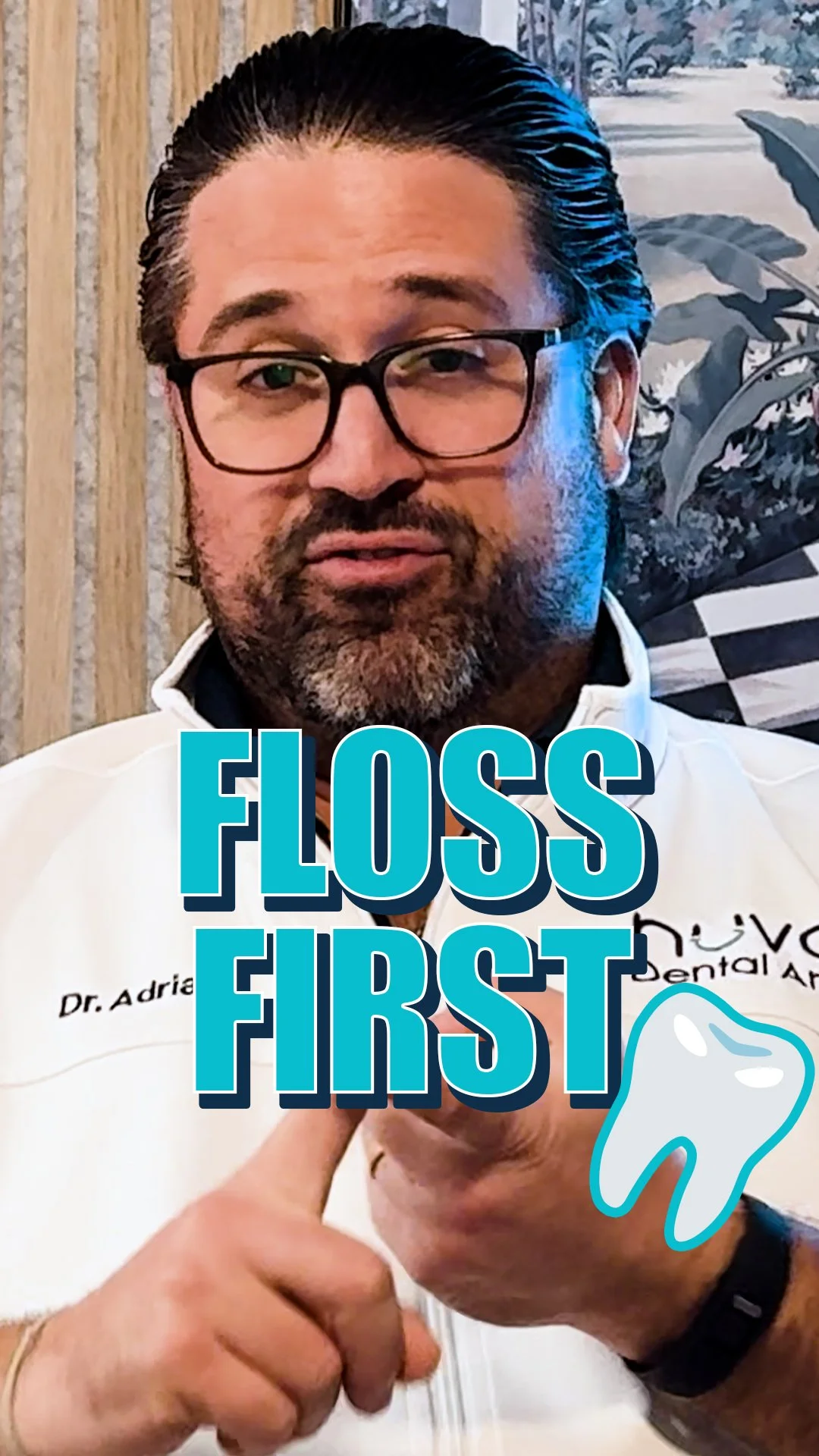
Dr. Adrian Gonzalez of Nuvo Dental Arts shares his personal three-step oral hygiene routine — floss, brush, then water pick — and explains why doing them in this specific order leads to cleaner teeth than the way most people do it.
Most people have a routine. Brush twice a day, floss when they remember, and maybe use a water pick if they have one.
But here is something most people have never thought about — the order you do those things in actually matters. And according to Dr. Adrian Gonzalez of Nuvo Dental Arts, most people are doing it backwards.
"My ultimate hygiene regimen is brush, floss, and water pick — but not in that order."
So what is the right order? Let's break it down.
Step 1: Floss first
Yes, before you brush.
This is the step that surprises most people. Almost everyone learns to floss after brushing, but Dr. Gonzalez recommends doing it the other way around.
Why?
Because flossing first loosens up all the food particles, plaque, and debris stuck between your teeth — the stuff your toothbrush physically cannot reach. Once that material is dislodged, brushing can actually sweep it away. Brush first and the floss just pushes some of it back into the gaps you were trying to clean.
Flossing first also exposes more tooth surface to your toothpaste, meaning the fluoride and active ingredients can do their job on areas that would otherwise be blocked by debris.
Step 2: Brush second
Once you have flossed, brushing does what it is best at — sweeping away the loosened debris and coating the teeth with the cleaning agents in your toothpaste.
A few quick brushing reminders:
- Brush for a full two minutes (most people stop way too early)
- Use gentle, circular motions, not aggressive scrubbing
- Don't forget the gum line — that's where most issues start
- Replace your toothbrush every three months or after illness
Step 3: Water pick last
This is where the magic happens.
As Dr. Gonzalez explains:
"The best way that I have found to clean my teeth is I floss first, I brush second, and then I water pick all the junk out. That is the way to do it."
The water pick (also called a water flosser) is the final step because it flushes out everything the first two steps loosened. Any remaining debris between teeth, around the gum line, or trapped in tight spots gets pushed out completely.
Doing this last means:
- You finish with a clean, rinsed mouth
- Toothpaste residue and dislodged debris get flushed away
- Hard-to-reach areas (back molars, around dental work) get a final cleaning
- Your gums get a gentle massage that boosts circulation
Why this order works so well
The reason this sequence is more effective than the standard routine comes down to one principle: each step builds on the last.
- Floss loosens what is stuck
- Brush scrubs and treats what was loosened
- Water pick flushes out everything that remains
If you brush first, you are essentially polishing dirty teeth — the toothpaste cannot reach the spots where the real buildup is hiding. If you skip the water pick, you are leaving dislodged debris in your mouth to settle back in. Each step does something the others cannot.
What if you don't have a water pick?
If you don't own a water flosser, the floss-then-brush order still applies. Floss first to loosen debris, then brush to clean and treat. Rinsing thoroughly with water at the end can substitute for the water pick to some extent, though it is not nearly as effective.
Water picks are an investment that genuinely pays off — especially for patients with braces, implants, bridges, or gum disease — and they are something many of our patients ask us about during cleanings.
Small change, big difference
Switching the order of your routine sounds like a small thing. But over time, this small change adds up to:
- Less plaque buildup between cleanings
- Fewer cavities and gum issues
- Fresher breath throughout the day
- Better results from your daily routine without spending more time on it
It is the kind of tip that costs nothing, takes no extra time, and just works.
More dental tips and care in Miami
If you have questions about your home routine, want to know if a water pick would help your specific situation, or are due for a cleaning and exam, we would love to see you.
Serving patients in Miami, Coral Gables, and Coconut Grove, Nuvo Dental Arts is here to help you build the kind of daily routine that protects your smile for life.
📍 Nuvo Dental Arts
Serving Coral Gables and Coconut Grove
📞 Book your appointment today and let us help you take the best possible care of your smile.